About hour and a half hour drive from Sydney near Wollongong Nan Tien Buddhist temple is nestled amid the hills and forests. Established by late Buddhist Monk Hsing Yun to promote Buddhism (Mahayana) in all parts of the world, this massive premise is full of Chinese pagodas, stairs, statues housing several Buddha sculptures, prayer rooms, libraries and shops selling Buddhist memorabilia. Although all the structures are built in modern times recently, none of which are actually heritage, the place transcends into the historic time of ancient Chinese Shangri La.
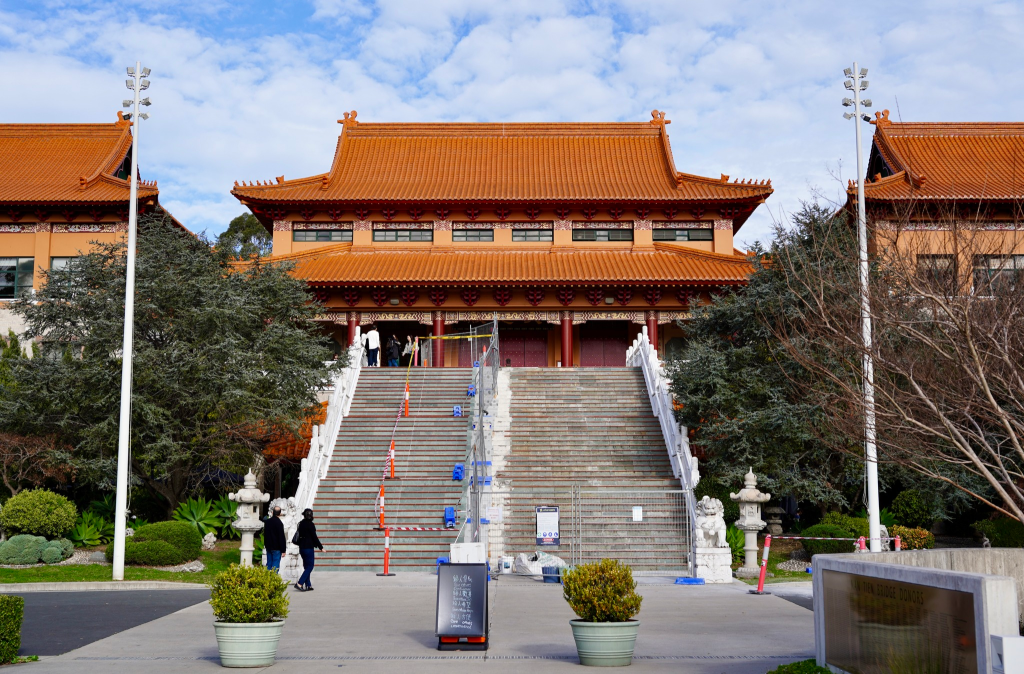
The main Pagoda reminds me of a similar temples in Su Zhou, China.

At the base of the temple premises near car park visitors are greeted by a smiling standing Buddha statue holding lotus in his hands and blessing the world.

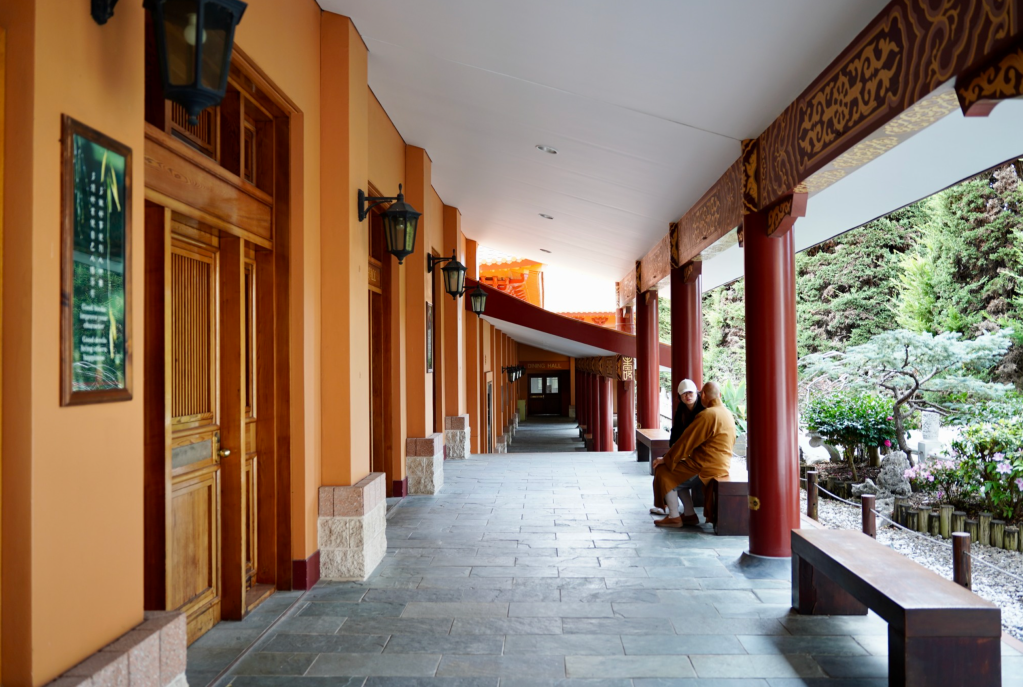
The monastery houses monks, scholars and devotees. You can find monks chatting with visitors in the corridors. There are Buddhism and meditation classes run for anyone interested in learning about the philosophy and that elusive inner peace.
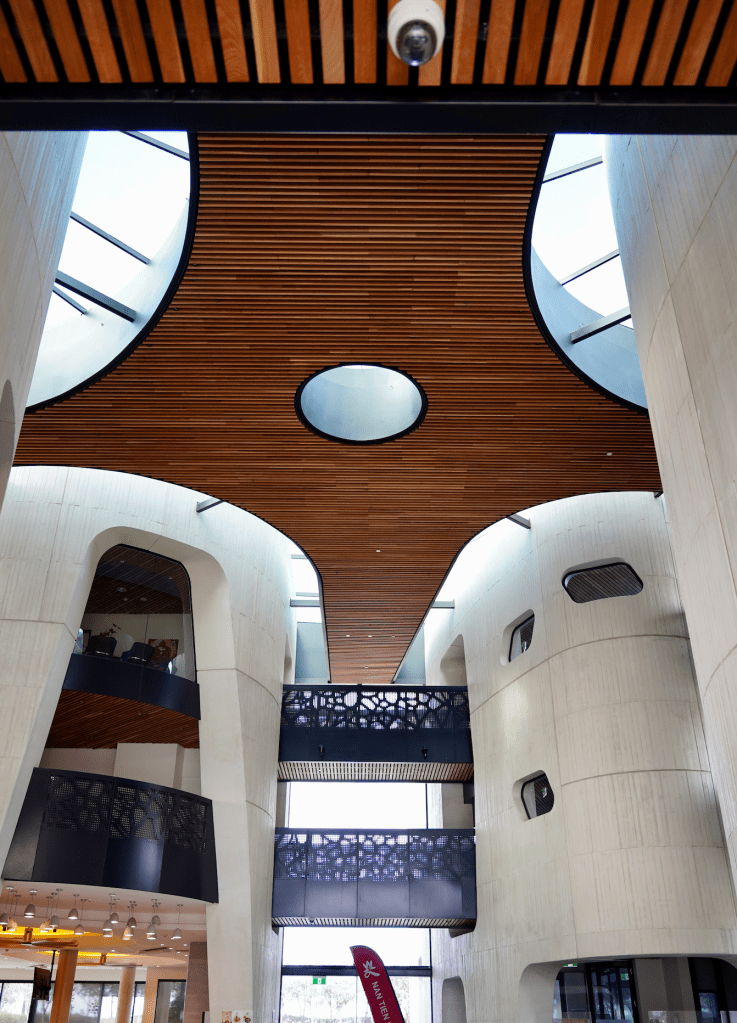
The Temple is connected to a beautifully designed modern institute building dedicated to Buddhist studies by an equally outstanding bridge. The building is standout architecture design and a sharp transition from the Buddhist pagodas to a hip modern design. The inside is spectacular with ultra high open hall greeting you in entrance from all four corners of the building while housing several rooms hosting museums, libraries, conference halls, office spaces and a beautiful cafe.
The Temple is a must visit and one of a kind, claiming to be the biggest Buddha temple in entire Southern hemisphere of the planet. It has an aura of peace and tranquility resembling any Buddhist monastery even with large number of visitors strolling by. This probably has to do with the open wide and fluid design of the place.

Although meant to be a temple, the whole place is fully commercialised with sale of Buddhism related merchandise – wearables, books, jewellery, art products, statues and so forth. However, the temple does seem to able to achieve its goal of promoting Buddhism overall, that is what eventually matters, I guess.

 Ravi Tandukar