COVID-19 lesson: Reinvent yourself, Digitise or die


Vietnam 2014 - 1037

What if there is COVID-20? Or COVID-21 or 22..?
May be a different virus, or something else that creates similar upheavals and disruptions. Basically it is not over yet with even the current one, it may never be. It might really be like what many are saying, it is here to stay for good, we might not win against it. Or even if we do, it might not be a complete victory, like the HIV.

In Australia alone more than 6 million people lost their jobs and had to line up in government subsidies, jobless cash handouts, meals handouts from charities. Their dignities and self worth compromised, these people- specially the retail workers, international students and migrants were most hard hit and had nowhere to turn to. In case of the students, with government flatly refusing to help them as they were busy taking care of their own citizens, and with flights cancelled, they neither had money to survive here – rent and food, nor able to buy tickets to return to where they came from. It was a catastrophe for them, that many of us who were fortunate enough to have jobs that allow working from home would not be able to imagine the ordeal these young people had to go through.

How about the professionals, specially the small business and self employed, in various fields? Most saw loss of customers, clients and business. COVID has forced people into their homes, cannot move around, get out to work as easily. Many have realised you are in a situation where you have to either adapt or die in your professional life. Meaning, your business has to adopt digital technologies, online and Internet delivery of your services. If you cannot, you will be gone. And it appears this online is not going away for most part, the world as we know it, has changed for good.

Most in ‘stable’ work are also rethinking their job security. With loss of business, they witnessed their companies lay off people – Quantas and Virgin are the prime examples in Australia. Government did not come to rescue. Even the job seeker allowance, the salary support government has been providing to companies to pay their laid off staff is being reconsidered and likely be withdrawn soon. They might soon join the food queues themselves, or join the exploding figure of mortgage defaulters list, and potentially look into being homeless. Scary thoughts. Things may not be as bad as they seem, but what if it is? Everyone needs to rethink their life strategy, diversify their skillsets and be ready to adapt and adopt new ways of making living. I wonder what would you do if you are an artist, actor, singer, chefs, graphic designers..list is endless, everyone has to evolve, I guess. Everyone is forced to ‘reinvent’ themselves.

Shiva and Buddha under one roof


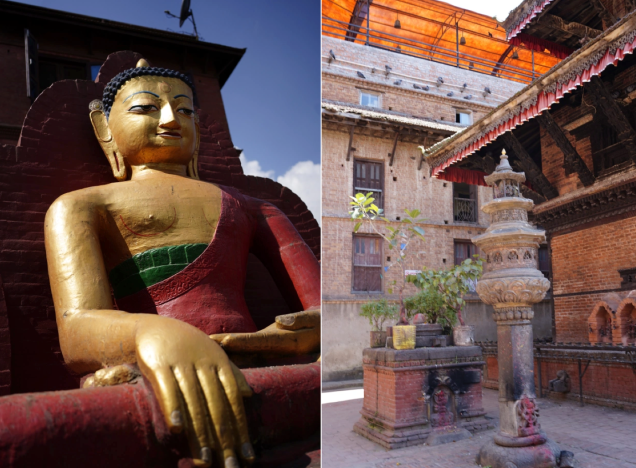
Buddha-Shiva

Every religious Hindu Nepalese home have another ‘God’ worshipped under their roof, Buddha. A statue or a picture of Buddha in his orange robe are lined up along with the Hindu Gods, Goddesses and Deities. Ironically, key pillars and core of Buddha’s teachings are completely in contrast to lot of what the Hindu mythologies teach, celebrate and advocate. This has always posed a conundrum to me, a fellow Hindu who also follows Buddhism, with or without fully understanding either of the two.

While the Hinduism is a vast religion with immense depth of knowledge, teachings and lessons on how to live human life with dignity, compassion and tact, enshrined in may religious doctrines called Vedas and Upanishads, it also has innumerable myths, mythical characters embodied as Gods and Goddesses and Deities that people worship and pray to with blind faith. Stories of numerous deeds and apostles of these human lookalike superbeings like Shiva, Vishnu, Bramha, Durga, Kaali are scribbled in many mythical books and stories. Triumphs of Rama is another example from more modern era and are congruent with more recent and identifiable geographical locations and times, mostly around Indian subcontinent – India, Nepal, Sri-Lanka and South East Asia – Thailand, Indonesia (Bali) and so forth. These mythologies are believed to be True for the Hindus and they worship them up till now by bringing them into physical forms of statues, temples, paintings and carvings. They sing their praise and greatness in innumerable songs, chants and eulogy. This is completely against Buddha’s teachings which forbid any form of worshipping of so called Gods, Goddesses and deities as the practice is deemed superstitious. He himself encouraged to question everything, including even his own teachings, rather than oblige without questioning and follow blindly.

The celebrations of Hindu festivals transcend religious faith and become embedded into people’s ways of life, social norms and national identity, thus creating lives of their own. For example, Dashain, the biggest festival of the Hindus in Nepal, celebrated as a victory of Good over evil, has an underlying story of Goddess Durga, believed to be one of the incarnations of Parvati, wife of Lord Shiva,  killing a monstrous king of the Asur or Rakchhyas tribes, named Mahishasur because he was on a killing spree of fellow innocent non Asurs. The same festival is also celebrated in memory of victory  by Lord Rama, then prince of Ayodhya in Northern India over Ravana, another Asur king of Lanka (present day Sri-Lanka). Dashain serves not only religious purposes, it is also the longest national holiday and time of almost mandatory family gathering, akin to Christmas or Eid or Chinese Lunar new year. People from far flung places gather at home to receive blessings from the parents and one’s elderlies , in the form of Tika (a mixture of red dye, Yoghurt and rice) put in the forehead and jamara (barley) leaves. Whole country stops for about a week to accomodate the travels and provide people with a break.

Buddha’s teachings however, forbid any sort of worshipping of these so called Gods and Goddesses as they are considered blind faith, something Buddha had emphatically told his followers to avoid. How could you believe in something nobody had ever seen or heard from? How many of his followers and believers understand and internalise this?His teachings are scientific to an extent and although he at times incorporated ideas of past and future lives after death, they seem merely to make people adhere to good deeds, a case of carrots and sticks. You do good, you get to reap the rewards right in this life time or next. And same goes for bad. The Panchasila, his five precepts or ethical codes for living a dignified human life consists of – not killing any living being, not stealing, not lying, not taking any intoxicating food, drugs or drinks and not having any sexual misconduct. With these basic ethical elements, humans lay foundation to Nirvana or enlightenment. Ahimsa, or non violence,  is another element of his vast teachings. If you read any Hindu mythology book however, you will find that the stories are full of Hindu Gods indulging in many mischiefs that are completely against Buddha’s teachings, although these deeds are most of the times said to be carried out in order to achieve greater good for sake of humanity. But at times the Gods seem to succumb to greed, lust and anger too, just like human beings. Hindu Gods and Goddesses are also part of violent practice of animal sacrifices. In major Hindu festivals like Dashain, every Hindu Gods and Goddesses are offered animal sacrifices in Nepal, completely in contrary to what Buddha taught. Whether this is part of any Hindu doctrines or teachings is doubtful, but has become part of the festivals to appease the Gods into granting followers their wishes.

Fact is, any two religions being in total opposite to each other in ways they serve their message, beliefs and methods is nothing abnormal, after all, it is completely dependent upon their origin, the realities of the times they began and purpose they served. However, the people believing two polar opposite religions simultaneously and embrace both is quite extraordinary. So one might wonder, if the people, specially the Hindus, who ‘worship’ Buddha understand anything he taught. Historically, Buddhism used to be the prominent religion in Nepal and surrounding, gradually giving way to Hinduism, as the Kings of the time started to follow the latter, with the general populace following suit, willingly or forced, and Buddhism started to wane. However, those Kings still respected Buddha, embodied by the facts that the Buddhism was allowed to flourish to some extent, as long as it did not get in the way of Hinduism, and always respected, evident by several Hindu God statues having Buddha sitting on top of their heads, one such example is the Statue of Shiva Linga at Pashupatinath temple, the biggest Hindu temple dedicated to Lord Shiva.

So the conclusion I always come to this conundrum is that both religions are respected and exist in harmony, people have accepted both to be part of their lives regardless of their understanding of the core values they embody. Both have similarities and common threads that bind you to principals of just, compassionate and ethical way of living, and people stop at that mostly, and ignore the differences. Understanding something to the core is great, but not necessarily has high value in itself. Even without understanding the whole, if you can extract the essence of good out of it and apply in your living, that is much more valuable. Worse would be going down the wrong path, with full understanding.

Working from home: home bound but not home free?

UyIOJLNdQJyimtYPtliHwg

When famous celebrities started to post their vents in social media about being ‘locked up’ in their own houses in the current situation brought on by COVID-19, many vented against them in return, ranting and blaming them for their spoilt child syndrome. True, how could they complaint? After-all they are living in their sprawling mansions complete with massive pools, gardens, personal staff, basically everything money can buy. That is in complete contrast to us mere mortals who have to make do with our mortgage bound little dwellings in the suburbs. Lockdown has left us unable to venture freely anywhere except for occasional visits to grocery stores, walks or joggings around our area, or for lucky few beaches and swims in the oceans. Well when the disease first started to make headways, though precautionary, we were allowed to work from home in shifts. Pretty quickly that became a national order and we have our asses glued to our home office chairs since. True to its appeal, work from home, it was very exciting at first. You get to stay home and earn! Thanks to technology and my profession, it was really fortunate I could do it, since so many have lost their jobs. Economy is sliding backwards down the hill and things could start to look really ugly if the lockdown continues to keep offices and shops closed, streets deserted. Like I said, it was exciting at first, get to stay home, enjoy backyard and finally get to spend all waking hours with family instead of toiling away at work.

Well, soon afterwards though, different sets of reality start to set into your life, and this is not working from home you used to have before, not the same at all. With early morning meetings, back to back calls and not really being able to pull away from desk, because everyone is at home, everyone knows this is how it is for everyone, will result in you working much more than you were at work, from the dawn to dusk. You cannot really venture outside due to lockdown, all you have is an outing to your backyard chair and staring to far away sky, rain or shine. That is if you are lucky to have a backyard, if you live in an apartment, the only ‘backyard’ would be your balcony, so a real feeling of being trapped.

The lofty things you thought you could do working from home, like gardening, cleaning up your sheds, reorganising your closets, have a nice family lunch, spending quality time with your family, actually hardly materialize. You are home bound, but not at home really. Your life is still sucked away by work, actually end up working more hours. This is a real secret the employers should have found out earlier, before Corona happened, people actually put in more hours, more intense hours, like it or not. For parents with young ones, the little princes and princesses will appear completely different, they turn into little monsters, interrupting your calls, work, jumping into your keyboards and chucking those long tantrums in the middle of your conference calls. Suddenly you realize how the in laws or parents that you conveniently dropped off your little princes and princesses to coped with these crazy little humans :-), and how thankful you are to them now. Now that they have full access to you, you have no place to run of hide either, you have to play with them like it or not, let them climb all over you, let them hit your head or face as they show their affection to mummy or daddy the way they know best, wait for them to fall asleep during their naps in the afternoon, change nappies while clutching your mobile between your jaw and your neck, regardless of whatever you are in the middle of. Remember those families complaining, who returned from overseas flights and were taken straight from airports to being locked up in five star hotels for a two week quarantine? Imagine how they lived for those fourteen days crammed together in their golden cages, young kids and parents, with no escape, not even allowed to go down to hotel lounge or gardens.

Joy and stress all coin up together into this mushy confusing fur ball you never imagined  was a part of working from home. Hmm, it dawns on you finally, the combination of lockdown and working from home this time around, is not a holiday after-all.

But at least you have Netflix, you scan still continue to flash watch ‘Tiger King’ in the evenings, and you discover suddenly how many cats and dogs your neighbours have, how they sound, that tree in or next to your house and those birds who call those trees home. Your life starts to resemble the roulette wheel, only that it is a predictable one this time, and you know that is going to hit you in the morning, its a full circle you now know very well. Or you might feel like you are running on a hilly road with infinite number of ups and downs, sun shines, you start your day with morning Webex meetings, intermittent breaks with walks in the backyard, intense work, more online meeting, then suddenly you realize it is 5 or 6 pm, day seems to slowly fade, but your work is still humming, suddenly you realize its dinner time. Do your chores, have some TV time with your family, some more work on that laptop you have kept it humming, and before you know it it is mid night. And the dread sinks in without any warning, you have about 6-7 hours to settle your mind, sleep, and the cycle starts again tomorrow. There is no break, variety of pattern to your day. Suddenly you realize how much you would enjoy your daily drive or even that daily commute to work you hated so much, those coffee breaks with colleagues, banters, walks around work. You might still be a modern day slave that you call yourself, but now those little freedoms seem so savoury, valuable, just can’t help missing it.

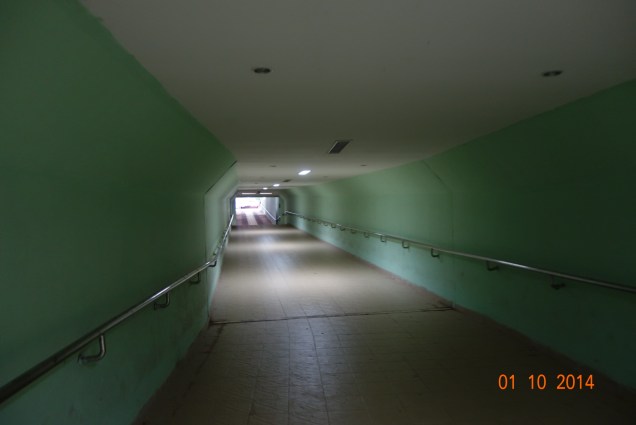
With no end in site for lockdown yet, your cravings will only increase. But hope you spend your time wisely and achieve something other than lost hours at work and meetings. Make sure you refresh old or earn some new learnings, give yourself a chance to spend some time on your hobby you wanted it so badly, talk to your family, so that you have something to show for once the light appears at the (end of the) tunnel eventually. Just remember, nothing in life is free, but I am sure freedom will taste lot better then!